
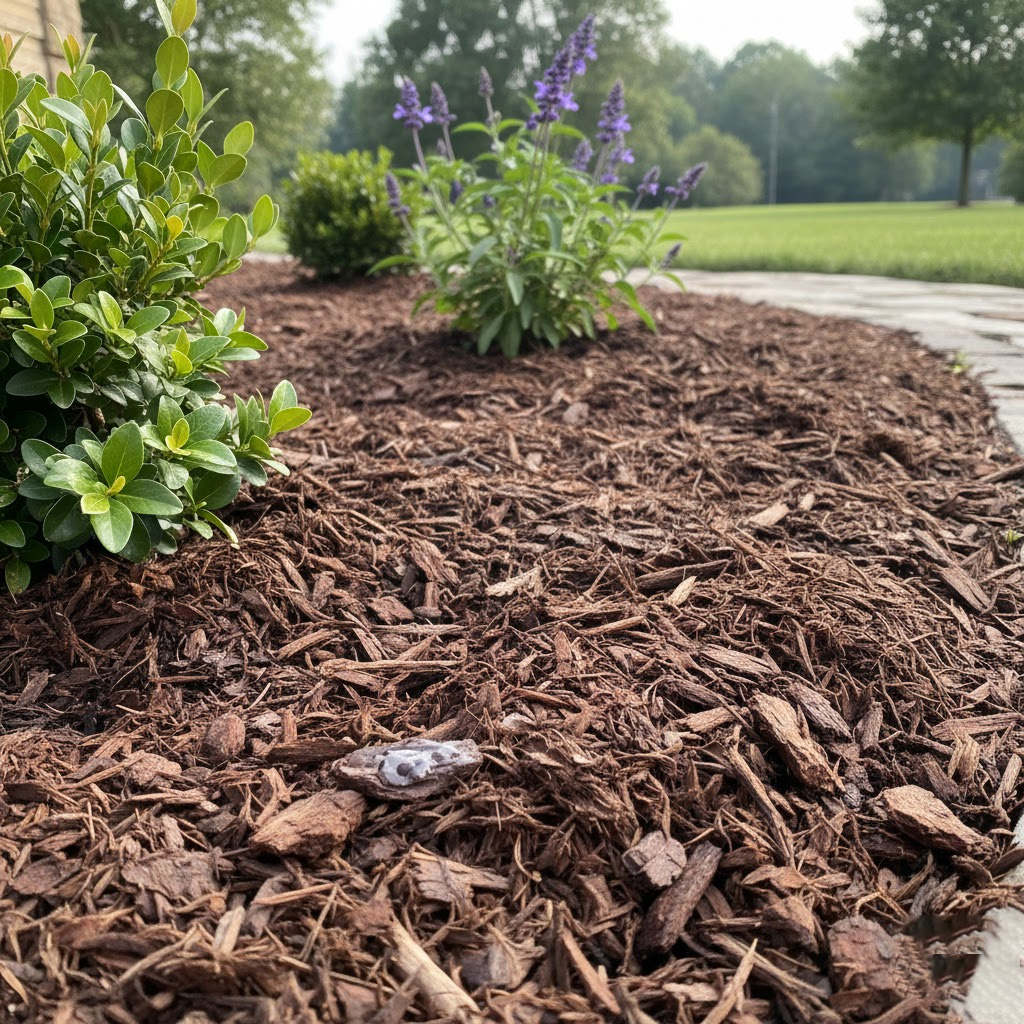
In a region prone to water restrictions and intense summer heat, mulch is not optional—it’s vital. A proper layer of mulch is the single most effective way to conserve water, regulate soil temperature, and improve the health of your landscape beds. Let’s look at the best choices for Central Texas and the proper way to apply it.
The Three Primary Benefits of Mulch
Beyond making your landscape beds look clean and defined, mulch performs critical functions in the Georgetown climate:
- Water Conservation: A 2-3 inch layer of mulch can reduce moisture evaporation from the soil by up to 50%. This is essential during Texas droughts.
- Weed Suppression: By blocking sunlight, mulch prevents weed seeds from germinating, drastically reducing the need for hand-weeding and chemical treatments.
- Temperature Regulation: Mulch acts as an insulator, keeping the soil cooler in the summer and warmer in the winter, protecting delicate root systems from temperature swings.
Choosing the Right Material
While pine straw and gravel have their uses, for the majority of Central Texas residential beds, we recommend organic wood-based mulches.
Top Picks for Texas Landscapes:
- Shredded Hardwood Mulch: This is the most common choice. It decomposes slowly, enriching the soil over time, and its texture interlocks well, preventing it from washing away during heavy rains.
- Cedar Mulch: Naturally repels insects due to its oils, and has a distinctive, pleasant smell. It retains its color well and is an excellent insulator.
- Compost Mulch: While less aesthetic, well-aged compost provides maximum nutrient benefit and water holding capacity. It can be used as a soil amendment or as a top layer.
The Critical Step: Proper Application Depth
The number one mistake homeowners make is applying mulch too thinly or too thickly.
- Optimal Depth: Aim for a consistent 2 to 3 inches across the entire bed.
- The "Mulch Volcano" Myth: Never pile mulch high around the base of trees or shrubs. This traps moisture against the trunk, inviting disease, insects, and bark rot. This is often called a "mulch volcano."
- The Proper Ring: Keep mulch 2 to 3 inches away from the base of all plant stems and tree trunks to allow for airflow and prevent rot.
A fresh layer of mulch adds instant curb appeal and acts as a long-term investment in the health of your soil and plants.